TOP 30 PUSH-UP VARIATIONS IN CALISTHENICS
Push-ups are one of the most popular calisthenics exercises worldwide. The main muscles worked during push-ups are the chest and triceps, with the anterior deltoids and core acting as secondary muscles.
They’re also incredibly versatile — you can include them in your workouts whether you’re a beginner or already at an advanced level. This is thanks to the huge variety of push-up variations out there, which let you make the exercise as challenging as you want.
With this post, my goal was to cover the different types of push-ups available. However, I quickly realized the possibilities are endless, so I focused on the 30 most commonly used and famous push-ups in calisthenics.
If this post gets good traction, I’m committed to expanding it into a TOP 50.
I won’t keep you waiting any longer… let’s dive into push-ups!
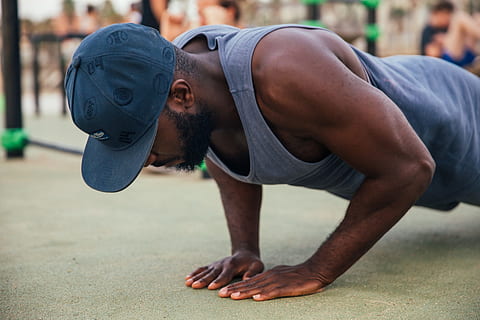
1.Knee push ups: a “light” version of the standard push ups. They are ideal for building strength in the triceps and chest if you’re just starting out. Keep in mind that by supporting yourself on your knees, you limit the stabilization work done by your core.
2.Close-grip push ups: consist of narrowing the hand placement to focus more on stimulating the triceps.
3.Wide push ups: you widen your hand placement to focus more on the chest muscles.
4.Incline push ups: same form as standard push ups, but performed with your hands elevated on a raised surface. This reduces the difficulty of the exercise.
5.Decline push ups: performed with your feet elevated on a raised surface. This makes the exercise harder and emphasizes shoulder work.
6.Pike push ups: a progression from decline push ups. This is the first step towards handstand push ups. The execution focuses on bending at the hips and straightening the legs to form an inverted V shape. In the eccentric (lowering) phase, you bring your head toward the space between your hands.
7.Elevated pike push ups: same as basic pike push ups, but with your feet elevated on a box or similar. These are the precursor to assisted handstand push ups.
8.Diamond push ups: involves bringing the hands together so that thumbs and index fingers touch, then performing a push up. This focuses the effort on the triceps (even more than close-grip push ups).
9.Single leg push ups: standard push ups with one leg raised. This challenges your balance and requires extra core stability. Train by alternating the supporting leg.
10.Hindu push ups: start in a downward dog or inverted V position, then lower your body in an arching motion to finish in the opposite position. It’s a somewhat unique exercise that requires some lower back flexibility.
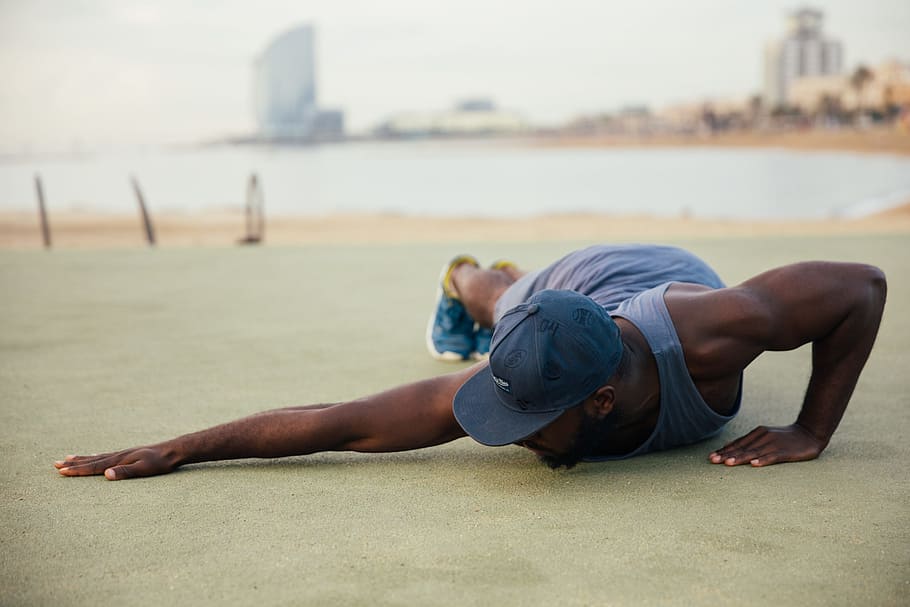
11.Archer push ups: start with arms wide apart and shift your body weight to one side. The form resembles an archer pulling back a bowstring, hence the name.
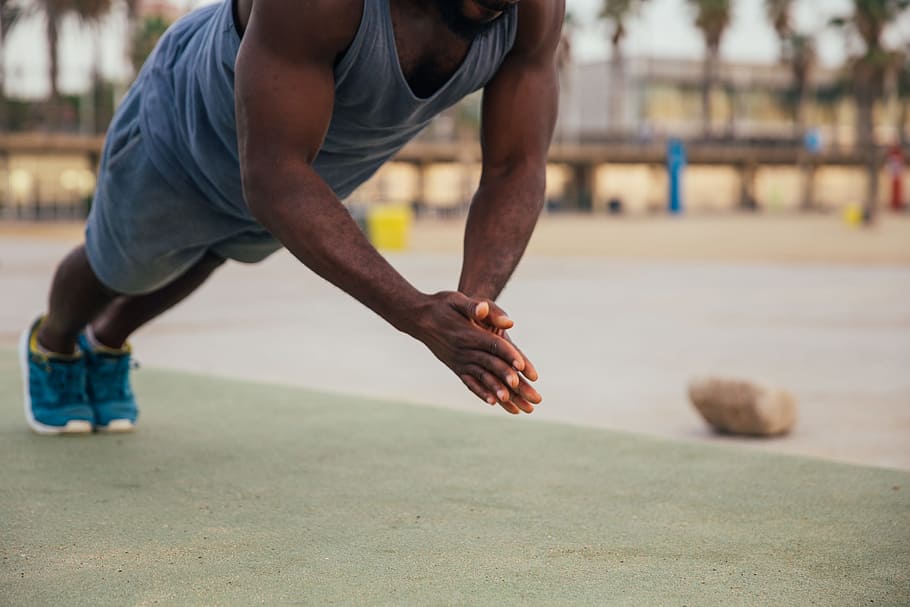
12.Explosive push ups: a standard push up performed with high power in the concentric (upward) phase, sometimes lifting the hands off the ground. This is the base for many explosive push up variations that aim for different effects.
13.Fist push ups: a variation where you use your fists instead of flat palms. The main difference is that this activates the wrist flexors more. Honestly, I’ve only done these when training boxing and didn’t have time to take off the gloves. Otherwise, I find them a bit uncomfortable.

14.Finger tip push ups: if the previous version was uncomfortable, these are even more so. Unless you want to strengthen your fingers for some reason, I don’t recommend including these in your training.
15.Ball push ups: performed with hands supported on a ball. This not only narrows the grip but also requires extra force to stabilize the ball.
16.Tiger bend push ups: on the lowering phase, you have to bring your elbows back until they touch the ground. Technique is important, and a slight rocking motion helps to return to the starting position. These are one of the first steps when training for the tiger bend.
17.Handstand push ups: also known as handstand presses, they are one of the most complete calisthenics exercises. To do a full rep, you must first perform a handstand and then lower yourself to about 90 degrees elbow bend. Having a solid foundation with easier progressions is very important.
18.Clap push ups: use your explosiveness to lift off the ground and clap in mid-air. There are many ways to make this harder, including clapping behind your back or combining multiple claps.
19.Deep push ups: these deep push ups emphasize the anterior deltoid and are great for strengthening the area for advanced exercises like planches or handstand push ups.
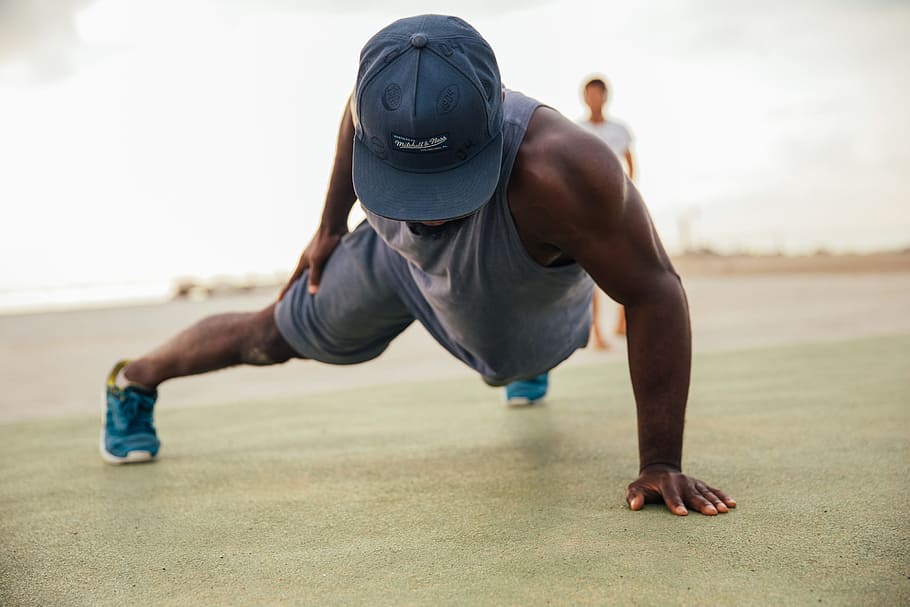
20.One arm push up: in the one-arm push up, position your legs slightly apart and place the arm you’re using aligned with your shoulder. This classic calisthenics move focuses effort on the biceps and triceps. Obviously, it applies a high load, so make sure you’re ready for it.
21.Pseudo push ups: this time your hand placement is lower, moving from shoulder level toward the start of your abdomen. The hands also rotate slightly to open up, reducing wrist strain. This is a useful exercise as a base to build pushing strength and shoulder stability, especially for planches.
22.180 push ups: once you reach a high level of explosiveness, you can try doing a push up while rotating your body 180 degrees. At first it seems impossible, but with the right technique you’ll get the hang of it quickly.
23.Superman push ups: a variation of explosive push ups where you extend both arms forward in the air. The result is the classic Superman flying pose.
23. 90 degree push ups: consists of going from a handstand to an elbow planche and back to the starting position. This is an advanced exercise requiring a solid handstand push up base, perfect negative control, and familiarity with elbow planche.
24.Single bar push up: use a bar or parallel bars positioned perpendicular to your body. Apart from grip position, the movement is like a normal push up. It’s slightly harder because the hand support point is reduced.
25.Inverted wrist push ups: a rare variation where the hands are supinated, activating the biceps more. There are supporters and detractors of this exercise. Personally, I believe there are better ways to train the biceps, even at home with minimal equipment, like resistance bands.
26.Weighted push ups: add weight to your sessions using a vest, plate, backpack, etc. Weighted training (done wisely and programmed well) is always effective and leads to great progress, in this and any basic exercise.
27.Straddle planche push ups: as the name suggests, performing a push up while holding the straddle planche position. You must have a very solid planche or you’ll compromise form.
28.Full planche push ups: as the name says, performing a push up in a full planche position. Like before, you need to hold a planche for several seconds before attempting this.
29.Resistance band push ups: add resistance with elastic bands. Try different types (usually color-coded) and select a resistance matching your level.
30.Spiderman push ups: starting from the initial position, your knee should move toward your elbow without needing to touch it. The same with the opposite side. This movement improves hip mobility and pushing strength.
31. 90 degree push ups: and one more bonus. This is an advanced calisthenics exercise consisting of going from a handstand to an elbow planche and back. It requires a strong handstand push up base, perfect control of the negative phase, and being accustomed to elbow planche or able to perform it easily.
That’s the list of the different types of push ups that exist. I hope you enjoyed it and learned some variations you didn’t know. Can you think of any more? Leave them in the comments and help me reach that TOP 50. See you next time!


Leave A Comment